From Seaweed to Circular Futures

A TEKWOMEN Agri-Rise Conversation with Sara Gibson, Founder of Kelpy Bone

Sara Gibson’s journey into sustainable innovation didn’t begin with a business plan - it began outdoors. Growing up on the coast and on her family’s farm, she was shaped by nature, curiosity, and role models who taught her that nothing is impossible if you're willing to work for it . Long before Kelpy Bone existed, Sara was drawn to environmental systems, fieldwork, and the kind of hands-on problem-solving that would eventually become central to her entrepreneurial life.
Today, she is the founder of Kelpy Bone, a regenerative, seaweed-based dog bone that replaces plastic chew toys - a product two years in the making, engineered in partnership with UK seaweed technology and advanced manufacturing teams.
What follows is an extended, authentic Q&A drawn directly from our Agri-Rise Founder Fireside Conversation, offering young women a genuine window into the realities of building in AgriFood-Tech.
Skye: Let’s start at the beginning. Were you always interested in entrepreneurship?
Sara: Not originally. I started my undergrad in human biology, but it didn’t click for me - it didn’t light me up. Growing up I loved Steve Irwin, I was outdoorsy, and my parents had a farm, so nature was always a big part of my life. A friend was studying environmental science, and I fell in love with all the fieldwork, so I switched into environmental science and sustainable development. The two really complemented each other. When I graduated during COVID, the job market was tough. I taught myself marketing so I could sidestep into industry and get some experience. That led me to nonprofits in Australia and the US working in plastics, waste, and circular economy and that’s where the idea of designing better materials started forming. I’d seen entrepreneurship through my dad, so starting something of my own felt achievable.
Skye: What was the specific problem that pushed you to create Kelpy Bone?
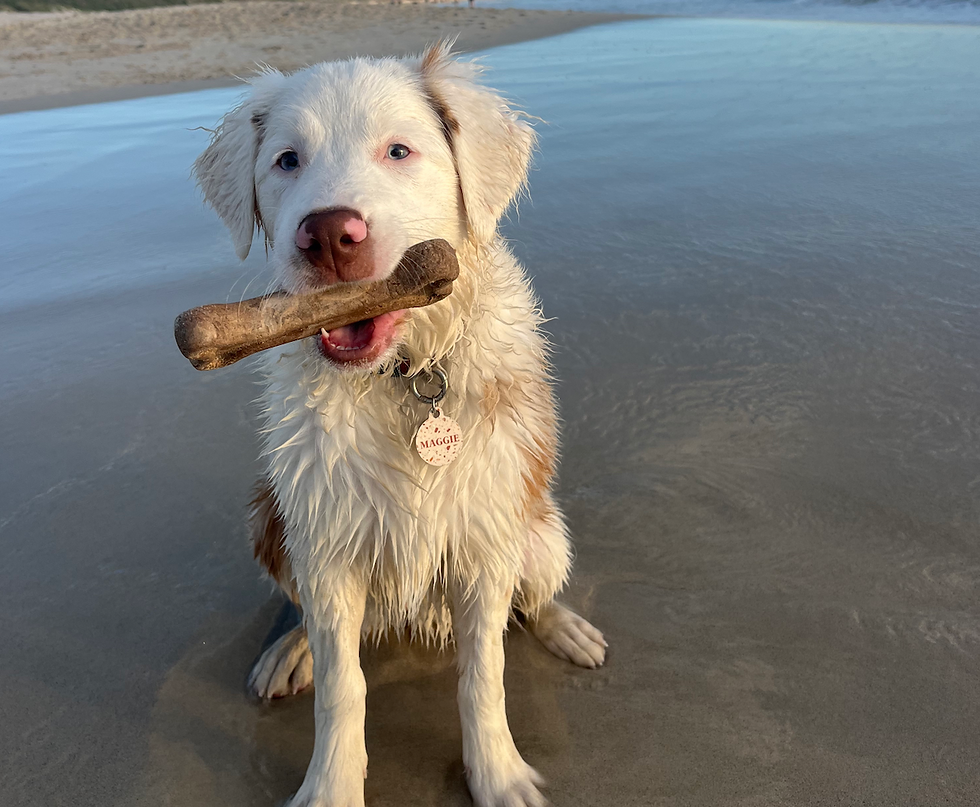
Sara: It actually started with my dog, Lenny. He decompresses by chewing, and one day he was gnawing on a plastic bone with bone marrow inside and little bits of plastic were going everywhere. I realised he was swallowing them. I tried finding an alternative, but nothing out there matched what he needed. I’d already done my thesis on single-use plastics in hospitals and was passionate about redesigning everyday products. I also knew from my plastics-waste work

that a lot of so-called “bioplastics” still contain plastic derivatives. I didn’t want that. So I researched globally, shortlisted companies doing it right, and eventually connected with Notpla, a UK seaweed tech company (winners of the Earthshot Prize). They get thousands of partnership requests, but I was persistent - emailing, connecting with multiple people on the team - until I got a call. They liked the idea but weren’t sure it would work. I said: let’s try anyway. We injection-mold the bone similarly to plastic, but the material behaves completely differently. It took two years of testing, engineering, and manufacturing collaboration with both Notpla and Plastek to get the final product right.
Skye: Many young women think they need everything worked out before they begin. What would you tell them?
Sara: You do not need the full picture. You only need the first step. I believed I needed certainty before starting but every piece of progress came from trying something and learning from it. Clarity arrives through action, not preparation. Confidence grows with momentum.
Skye: What parts of your background prepared you for this journey?
Sara: All of it. University shaped how I think, early jobs helped me understand systems, travel showed me the scale of waste and mentors encouraged me to be brave. I gained lots of experience and learnings in my work in not for profits and self-taught marketing skills. AgriFood-Tech is wide and varied. It needs people with many different skill sets. There is room to shape a career that feels personal and aligned. Something that helped me stand out early was being “healthily annoying”: emailing organisations, volunteering, learning every part of their business, taking initiative, and showing exactly where I believed I could add value. That persistence built credibility and confidence.

Skye: What has been the most challenging part of building Kelpy Bone?
Sara: The uncertainty and the constant learning curve. Importing product into Australia with seaweed means navigating biosecurity, customs, freight timelines, storage, shelf life… as a first-time founder, there’s so much you don’t know. There were moments when I wondered whether I belonged in certain rooms and whether my idea would be taken seriously. I questioned myself often. What helped was continuing to show up and learning to trust the process. Supportive people around me made a significant difference.
Skye: What has surprised you most about the journey?
Sara: How collaborative it is. I expected to spend a lot of time working independently but progress has come from speaking with people, sharing ideas and creating together. Scientists, designers, growers and community members have all influenced the work in meaningful ways.

Skye: What keeps you motivated when progress feels slow?
Sara: Remembering the purpose. We are creating materials that can regenerate rather than pollute. That is worth the patience it requires. I also keep rituals: screenshots of positive customer reviews, time with my dogs, walking on the farm, gardening, sleep. Resilience needs refilling every day.
Skye: How has your relationship with technology changed as your company has grown?
Sara: I see technology as a tool. It supports good decision making and reduces busywork. I use AI every day in my research and idea development. It helps me refine my thinking but it does not replace my own reasoning. Ethical use and transparency matter to me. Technology should enhance our connection to natural systems, not replace it.
Skye: What skills do you think young women should build if they want to enter agrifood tech?
Sara: Curiosity is the most important one. If you are curious you will naturally build the skills you need. It helps to understand basic science and communication and to practise critical thinking. Being able to simplify complex ideas is a valuable skill. Empathy and listening matter just as much as technical knowledge.
Skye: If a young woman has an idea but feels unsure of herself, what would you say to her?
Sara: Begin gently. Share the idea with someone you trust, write a few notes, do a small piece of research. Action creates confidence. The first step will not feel perfect but it will move you forward. I wish someone had told me that starting is where confidence comes from.
Skye: And finally, what does a meaningful career in AgriFood-Tech look like to you?
Sara: Work that aligns with your values. For me it is the ocean and the belief that materials can support life rather than damage it. For someone else it might be soil, food security or animal wellbeing. A meaningful career is one where your curiosity has space to grow. If you follow that, the path becomes clearer.
Closing reflections
Sara’s journey is a beautiful reminder that innovation often begins with curiosity. Her story shows that impactful work is not reserved for those with perfect plans or traditional backgrounds. It grows from noticing, questioning, experimenting and being brave enough to take the first step before everything makes sense.
For the young women of Agri Rise, her insights offer both comfort and direction. You are allowed to explore. You are allowed to learn through mistakes. You are allowed to build a future that feels meaningful.
If you are interested in entering the AgriFood-Tech sector and are unsure where to begin, please feel free to reach out admin@farmers2founders.com. We are here to help you explore your pathway, connect you with the right support and walk alongside you as you take your first or next step into this growing and important industry.
You can connect with Kelpy Bone and follow Sara’s work on Instagram and TikTok.